The awards were held at a ceremony in Parliament House, Canberra. The winners were presented with their awards by Heather Cook, Director of the Australian Institute of Criminology.
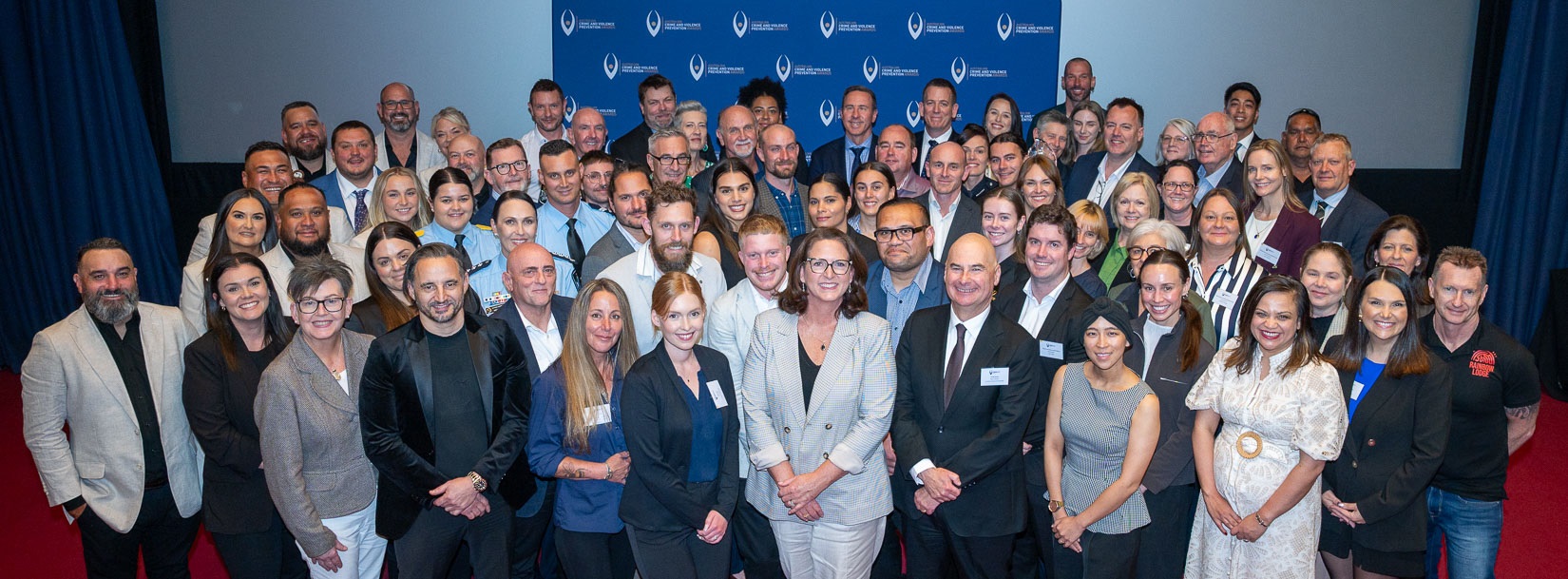
Community-based project winners
Gold winners
Big Brother Program—Everything Suarve, Queensland
The Big Brother Program is an evidence-based early intervention initiative designed for high-risk youth aged 16 to 24. Over a powerful 10-week journey, participants engage in a structured model that combines mindfulness, vocational training, mental health support and long-term mentorship from facilitators with lived experience.
The program leads to a notable decrease in youth offending and fosters a sense of reconnection with family, community and self. The Big Brother Program extends beyond the initial 10 weeks, establishing a foundation for lasting change. It creates a supportive environment that emphasises belonging and the belief that every young person has potential for hope.
Community Connectors—South East Community Links, Victoria
The Community Connectors program is a public safety initiative that focuses on supporting vulnerable people at Dandenong and Frankston train stations. It is delivered by South East Community Links in partnership with Metro Trains Melbourne.
Trained Community Connectors provide culturally responsive, trauma-informed assistance for those experiencing homelessness, mental health crises, substance use issues, family violence and youth disengagement. The program aims to proactively de-escalate conflicts, reduce police involvement and link people with essential services. It contributed to reducing crime and enhancing safety at stations during its first year. The program’s model is scalable, cost effective and centred on human needs, contributing to safer and more inclusive public spaces for everyone.
Start Court—State Forensic Mental Health Service, North Metropolitan Health Service, Western Australia
Start Court is a partnership between the Mental Health Commission and the Department of Justice, along with support from the North Metropolitan Health Service’s State Forensic Mental Health Service, Outcare, the Western Australia Police Force, Legal Aid WA, the Mental Health Law Centre, Aboriginal Legal Services of Western Australia, G4S and North Metro Community Alcohol and Drug Services. This court, located at Perth Magistrate’s Court, offers an alternative to traditional court processes for offenders facing mental health challenges, substance use issues, and unmet psychosocial needs. The courtroom is designed to create a less intimidating atmosphere, promoting a sense of hope.
The MERIT program—Department of Communities and Justice, Ministry of Health, New South Wales
The MERIT (Magistrates Early Referral Into Treatment) program is a voluntary, pre-plea court-based diversion program designed for adult defendants in the NSW Local Court who have issues related to alcohol and other drug use. The program offers access to a variety of treatment services over a 12-week period while court matters are adjourned. Its goals include reducing the harm associated with alcohol and other drug use, enhancing health and wellbeing and decreasing criminal behaviour among adults involved with the criminal justice system. MERIT operates as an interagency partnership, involving the NSW Department of Communities and Justice, the Chief Magistrate’s Office, NSW Health and the NSW Police Force. MERIT also receives guidance and support from Legal Aid NSW and the Aboriginal Legal Service NSW/ACT.
Silver winners
Dismantle Project—Dismantle, Western Australia
Since 2013 Dismantle has aimed to address disadvantage and its connection with criminal behaviour. The organisation accomplishes its mission through innovative programs that use bicycle mechanics to build connections with over 250 at-risk young people annually, fostering positive interactions and creating positive childhood experiences. In 2019, Dismantle launched ReNew Property Maintenance, a social enterprise. Stable employment and individualised mentoring have both been proven to reduce recidivism. ReNew combines these benefits by offering disadvantaged youth stable jobs along with comprehensive case management, enabling them to overcome personal challenges and develop the skills and self-confidence needed to turn their lives around.
Youth Choices Filmmaking and Ethical Thinking Program for At-Risk Youth—Constable Care Foundation, Western Australia
The program engages at-risk young people in collaborative filmmaking and philosophical inquiry to examine challenges and offending behaviours in their lives. Participants create a short film on a chosen issue and then screen and discuss it at a community forum where they devise and act out solutions. The intensive program specifically targets youth in Western Australia who are at the greatest risk of offending or reoffending relating to crime or antisocial behaviours. Participants include young people at Banksia Hill Juvenile Detention Centre, remote communities and Curriculum and Re-engagement in Education schools.
Power to End Violence Against Women—Power Community Ltd, South Australia
The Power to End Violence Against Women program is designed specifically for Year 10 students as a primary prevention initiative. It uses the power of sport to encourage respectful relationships and gender equality. Developed in collaboration with Power Community Ltd (the not-for-profit arm of the Port Adelaide Football Club), Centacare Catholic Community Services and the Government of South Australia, the program aims to help young men develop healthy attitudes towards relationships while addressing persistent views that may lead to gender-based violence. In consultation with the South Australian Department for Education, it aligns with the Keeping Safe: Child Protection Curriculum taught in primary and secondary schools.
Project 180—Canberra Police Community Youth Club, Australian Capital Territory
Project 180 is a transformative initiative of the Canberra Police, Community Youth Club (PCYC) designed to support at-risk youth aged 12–18. It offers personal development, education and life skills training to assist young people in making positive choices and steering clear of the youth justice system. Participants have the opportunity to transition into Canberra PCYC’s social enterprise programs, such as the Cruisin’ Cafe and Southside Mower Shed, which enhance employment readiness and aim to disrupt cycles of welfare dependency. Project 180 focuses on building resilience, emotional regulation and community engagement. The program is designed to empower young people to improve their circumstances and create brighter futures.
Safe2Say—Crime Stoppers Ltd, Western Australia
Safe2Say is a secure and anonymous reporting platform developed by Crime Stoppers WA. It allows individuals to report misconduct, abuse and violence without the risk of exposure. Unlike traditional reporting methods that rely on one-time submissions, Safe2Say allows users to securely access their report later. Reporters can provide additional information, respond to police enquiries or make clarifications at their convenience. This flexibility acknowledges that the process of disclosure can be non-linear and emotional. In many cases, as trust is built through ongoing communication, reporters may choose to identify themselves, which can enhance investigations and enable earlier intervention to prevent further harm.
Bronze winners
Safer Cities: Her Way—Wollongong City Council, New South Wales
Safer Cities: Her Way is a collaborative initiative between Transport for NSW and Wollongong City Council. The project involved co-design workshops with local women, girls and gender-diverse people, designed to identify safety concerns and trial interventions aimed at enhancing the safety of public spaces and transport hubs. The trial interventions targeted three areas: Wollongong, Dapto and Port Kembla. An evaluation of the interventions revealed an increase in perceived safety and a decrease in reported crime.
Maribyrnong Community Residential Facility—Corrections Victoria
The Maribyrnong Community Residential Facility was established in 2020 to provide temporary accommodation for those released from prison who have housing needs, to reduce COVID-19 related risks in this group. As the advantages of providing housing and on-site support for those transitioning from prison became evident, the facility’s focus shifted towards rehabilitation and reintegration. The facility assists residents to find stable long-term housing, connect with community resources and employment opportunities, and develop independent living skills. A longitudinal evaluation shows that the Maribyrnong Community Residential Facility represents a promising approach to justice reinvestment, improving prison system outcomes by reducing both imprisonment rates and reoffending.
Road to Redemption—Carey Training, Workskil Australia, Department of Correctional Services, South Australia
Road to Redemption is a pre-employment program designed for First Nations participants with offending backgrounds. It helps them to gain the skills, knowledge and support needed to find employment in the construction and civil construction industries. Participants gain a Certificate II in Construction, experience and practical skills by training and working on live construction projects. The voluntary program, lasting eight to 10 weeks, also focuses on developing soft skills and boosting confidence, along with providing culturally relevant mentoring before connecting participants with potential employers. The program’s objectives are to ensure sustainable employment outcomes for Aboriginal and Torres Strait Islander people and to contribute to safer communities by reducing recidivism.
Ngaramura Therapeutic Transport Program—Rainbow Lodge, New South Wales
Ngaramura offers therapeutic, culturally focused transport services for First Nations men and women on remand in NSW prisons, enabling them to safely access treatment centres for drug and alcohol issues, child restoration, or childbirth outside of custody. The program allows the local, district and supreme courts of New South Wales to consider bail applications in cases where access to safe, reliable or acceptable transport from custody to treatment is otherwise a barrier. The program provides opportunity for those at risk and on remand to get the help that they need to prevent further offending.
Strong Connected Neighbourhoods Program—Reclink Australia, Australian Capital Territory
The Strong Connected Neighbourhoods Program offers essential support to individuals and residents in the Ainslie Avenue Social Housing corridor in the Australian Capital Territory. Residents in this area struggle with drug and alcohol dependency, social isolation, and various mental health issues. Initiatives like the Strong Connected Neighbourhoods Program aim to divert individuals from the judicial system towards health-focused interventions. Additionally, these initiatives act as an important hub from which we engage with multiple agencies and organisations to achieve positive outcomes for both residents and the wider community. The aim of this program is to reduce reoffending and antisocial behaviours by fostering an environment of care.
Solid Ground—Canberra Police Community Youth Club, Domestic, Family and Sexual Violence Office, Australian Capital Territory
Solid Ground is a short-term intervention program offered by the Canberra Police Community Youth Club. It aims to support young people of any gender in the Canberra region, aged 11 to 18 years, who are affected by domestic, family and sexual violence. The program lasts for 20 weeks and includes strengths-based and person-centred practices through mentoring and casework. Participants engage with the Police Community Youth Club’s New Leaf program, the National Association for Prevention of Child Abuse and Neglect’s Love Bites respectful relationships program, and participate in adventure-based activities such as bike riding, bushwalks, kayaking, rock climbing and barbecues.
Police-led project winners
Gold winners
Safer Together Rockhampton—Queensland Police Service
The Safer Together Rockhampton initiative was a community-based effort guided by a formative research process that included community surveys, co-design workshops, stakeholder consultations and an environmental scan. This approach aimed to develop evidence-based project activities and resources that address the rising concerns regarding crime in the community. A project working group was established, comprising Queensland Police Service (QPS) district members, QPS Media and the local council. The pilot project was carried out in March 2024 and involved activities and resources tailored to the identified needs of the community, such as community safety communications campaigns, home security checklists and a community safety workshop.
Domestic Violence Disclosure Scheme—South Australia Police
South Australia’s Domestic Violence Disclosure Scheme aims to provide information and support to individuals at risk of domestic violence, helping them to better understand their situation and make informed decisions regarding their relationships. It allows those with concerns about their current or former partner to check for any history of violence in past relationships. The service is collaboratively delivered by Women’s Safety Services South Australia and South Australia Police.
Silver winners
Interdiction for the Protection of Children Australia—Queensland Police Service
The Interdiction for the Protection of Children program focuses on proactive, intelligence-led policing. It provides frontline officers with the necessary skills to identify, disrupt and prevent incidents of child sexual exploitation, child abuse and child abduction. The program equips officers with specialised training in recognising subtle signs of harm, even without prior intelligence or disclosures, enabling real-time intervention and safeguarding of vulnerable children. This approach differs from traditional models, which depend on reports or surveillance, by integrating behavioural risk recognition into officers’ daily interactions.
Taskforce Guardian—Queensland Police Service, Department of Youth Justice and Victim Support
Taskforce Guardian comprises committed members of the Queensland Police Service and the Department of Youth Justice and Victim Support (also known as Youth Justice). The taskforce is deployed to key locations to assist local police in preventing youth crime and reducing the number of offenders entering the youth justice system. Taskforce Guardian offers statewide support, supplementing local resources and collaborating with essential support services that emphasise health, education, disability services and First Nations initiatives.
Bronze winners
Blue Lures—Queensland Police Service, Queensland Blue Light
Blue Lures is an early intervention program led by police that uses recreational fishing to prevent youth crime and enhance community relationships. Initiated in St George by Constable Dan Burton and Police Liaison Officer Chelsea Beardmore, the program targets young people who may be at risk of disengagement, offending or exposure to domestic and family violence. With a focus on a culturally safe and trauma-informed approach, it creates positive, voluntary interactions between police and youth in relaxed outdoor settings. Supported by Queensland Blue Light, Blue Lures has expanded from one location to nine, with plans for an additional 23 locations, delivering meaningful early intervention results across the state.
Territory Community Safety—Northern Territory Police Force
Territory Community Safety is a police-led multi-agency initiative emphasising collaboration, partnership and community relationships. Sworn officers of the Territory Safety Division address antisocial behaviour and alcohol-related offences, along with Territory-wide support. A civilian unit coordinates information sharing and builds connections among various Northern Territory Government agencies, non-government organisations, contracted service providers and Aboriginal community controlled organisations. This initiative aims to provide coordinated, efficient and culturally appropriate services including accommodation, health services, family support services, and safety for individuals experiencing homelessness.
Digital Intelligence and Community Engagement team—Queensland Police Service
The Queensland Police Service established the Digital Intelligence and Community Engagement team to monitor social media platforms and community pages, aiming to detect potential criminal activity reported on these platforms. This capability employs staff from the Media and Public Affairs and Crime Prevention divisions to monitor websites and social media platforms that share information about crime and related issues. Their responsibilities include correcting misinformation, reporting on actions taken by the Queensland Police Service and partner agencies to tackle crime, and engaging in crime prevention initiatives through proactive communications on social media and other community platforms.